What does a water leak sound like?
When water escapes through a crack, a split joint or a pinhole, it is pushed out at the pressure inside the pipe. That jet makes a steady hiss, a bit like a tyre going down. The sound travels along the pipe wall, through the water inside the pipe, and out through whatever the pipe is buried in, whether that is soil, concrete, screed or a timber floor.
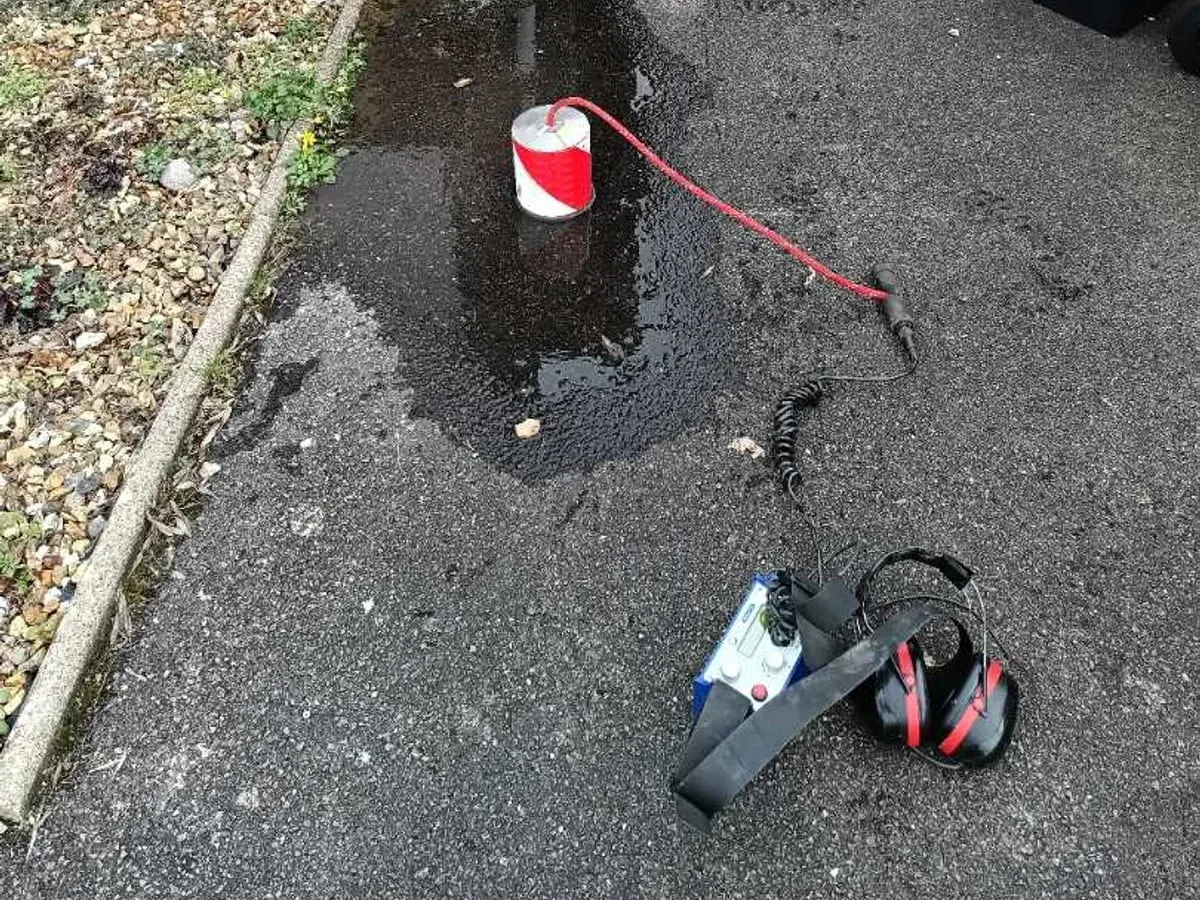
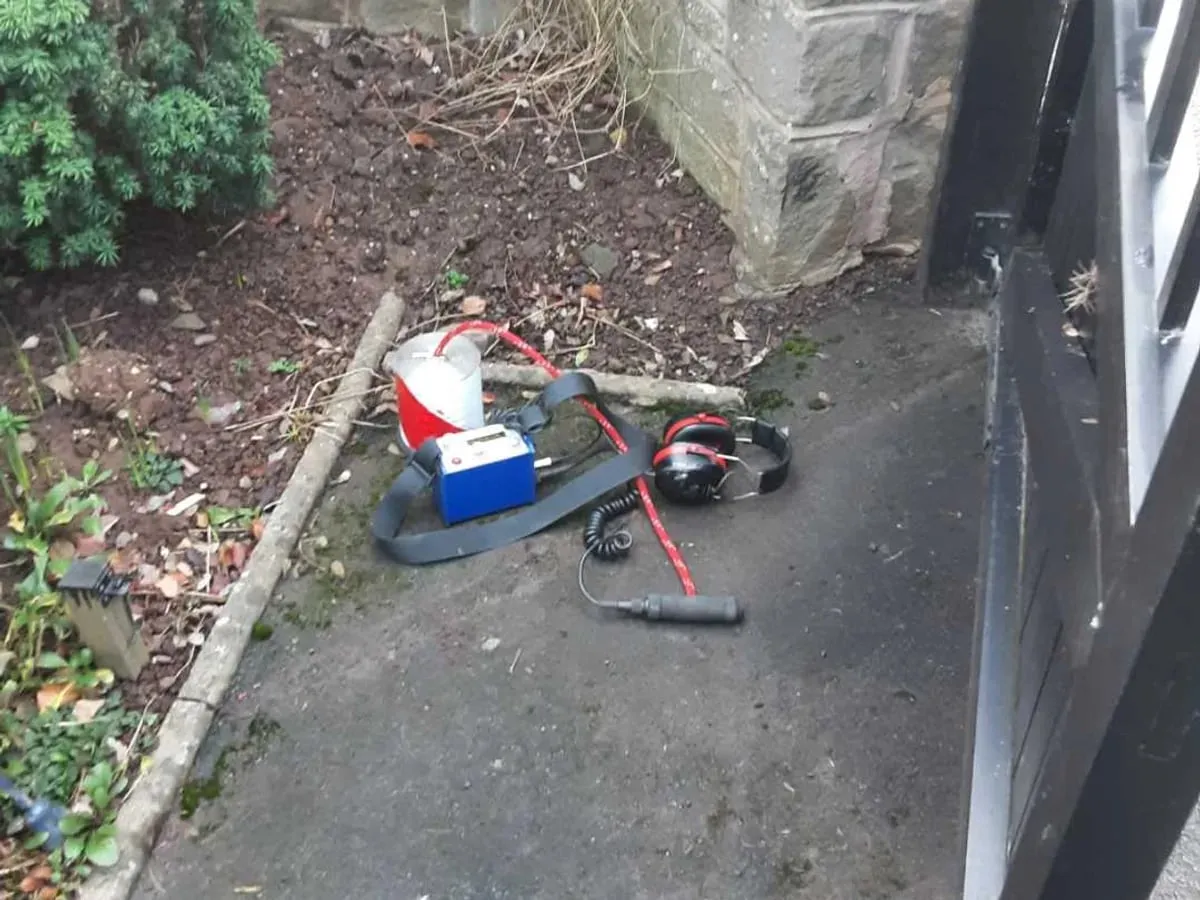
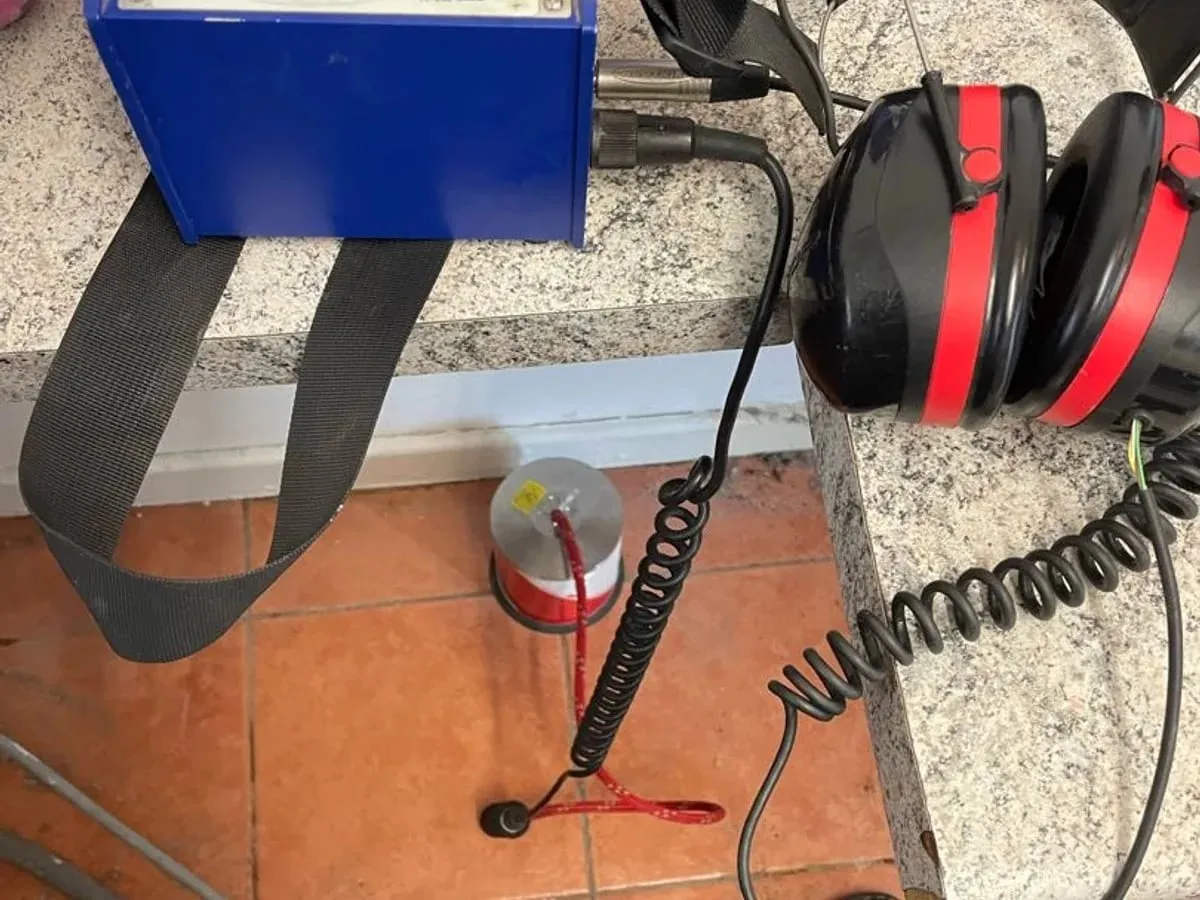
By the time it reaches the surface the hiss is usually too faint to hear unaided, and even when you can hear it, your ear cannot tell where it is coming from. A ground microphone is built to catch exactly that kind of faint, steady sound, and an amplifier makes it loud enough to judge through headphones and to read as a number on a display.
An acoustic leak detection survey, step by step
Listening is one part of a visit. On most jobs the engineer works through these stages, and skips any the evidence already covers.
- Prove there is a leak. With every tap off, the water meter should stand still. If it keeps turning, or a pressure test on the pipe drops, water is escaping somewhere.
- Work out where the pipe runs. The engineer traces the route between the fittings they can see (stopcock, meter, radiators, pool plant) so they know where to listen.
- Listen at the fittings. A listening stick touched on the stopcock, meter or an exposed pipe picks up leak noise carried along the pipe wall. It tells the engineer whether the leak is making a usable sound and which end of the run is louder.
- Survey the route. The ground microphone goes down on the surface above the pipe at regular stops. At each stop the engineer listens and notes the level.
- Close in. Once the levels start to climb, the stops get closer together until one point stands out as the loudest.
- Confirm it. Where the reading needs backing up, tracer gas, thermal imaging or a second listening pass from a different direction checks the same spot.
- Mark and open. The spot is marked, and the aim is to lift only that small area to reach the pipe.
Listening survey Example: supply pipe under a block-paved drive
Level logged at each stop:
- 111
- 2
- 3
- 4
- 5
- 6
- 7
- 8
- 9
Stop 1 of 9. Level 11. Start of the pipe run by the house.
What the engineer listens for through the ground microphone
A leak sounds steady. It does not stop and start the way a toilet refilling or a washing machine drawing water does, so the engineer listens for a constant hiss that is still there when everything else in the house is switched off.
They also compare. One loud reading on its own proves little, because sound bounces off walls, follows other pipes and gets louder where the ground is hard. What counts is the pattern along the whole route: levels that rise steadily towards one point and fall away again on the far side of it. Amplifiers have adjustable filters, so the engineer can cut out the frequencies where traffic and footsteps are loudest and keep the band where the leak sounds clearest.
Does the pipe need to be under pressure?
A leak only hisses while something is being pushed out of it. Mains supply pipes are pressurised all the time, which is why listening works so well on them. A central heating system that has already lost its pressure may need topping up for the survey, and some pipes are drained and filled with air so the escape can be heard.
Drains, gutters and overflows are not under pressure. Water trickles out of them quietly, so a listening survey is the wrong tool and a drain camera or dye test is used instead.
What affects an acoustic leak survey
- Background noise. Traffic, pumps, fridges, running water elsewhere, wind and rain all compete with the leak. Engineers ask for noisy appliances to be switched off and choose quieter moments to listen.
- Plastic pipe. Blue MDPE supply pipe and the plastic used for underfloor heating carry sound less well than copper, lead or iron, so the hiss fades faster and the stops need to be closer together.
- Soft floor coverings. Carpet and underlay soften what reaches the microphone. Engineers can listen on hard surfaces nearby instead.
- Pipes that loop. In underfloor heating and some older heating systems the pipe doubles back on itself, and a leak can sound loudest over the wrong length. A second method settles it.
- Very small leaks. A slow weep may make little sound at all. Tracer gas is usually better at finding those.
None of these rules listening out, but they are why ADI’s engineers carry more than one method. The accuracy guide goes into this in more detail.
What happens once the leak is found
The engineer marks the spot and, if you want the repair done, opens up just enough of the floor, drive or lawn to reach the pipe, replaces the damaged section and pressure tests the repair. You receive a written report with photographs of what was tested and found, which you can send to your insurer if you are claiming.