Acoustic leak detection equipment

Every acoustic instrument does the same job in a different place: it picks up the hiss of escaping water and passes it to an amplifier and headphones. These are the instruments in ADI engineers’ own photos from real jobs.

Call 0333 567 2640

Monday to Friday, 7:30am to 6:30pm. Tell the office where you think the leak is and they will book the right survey.

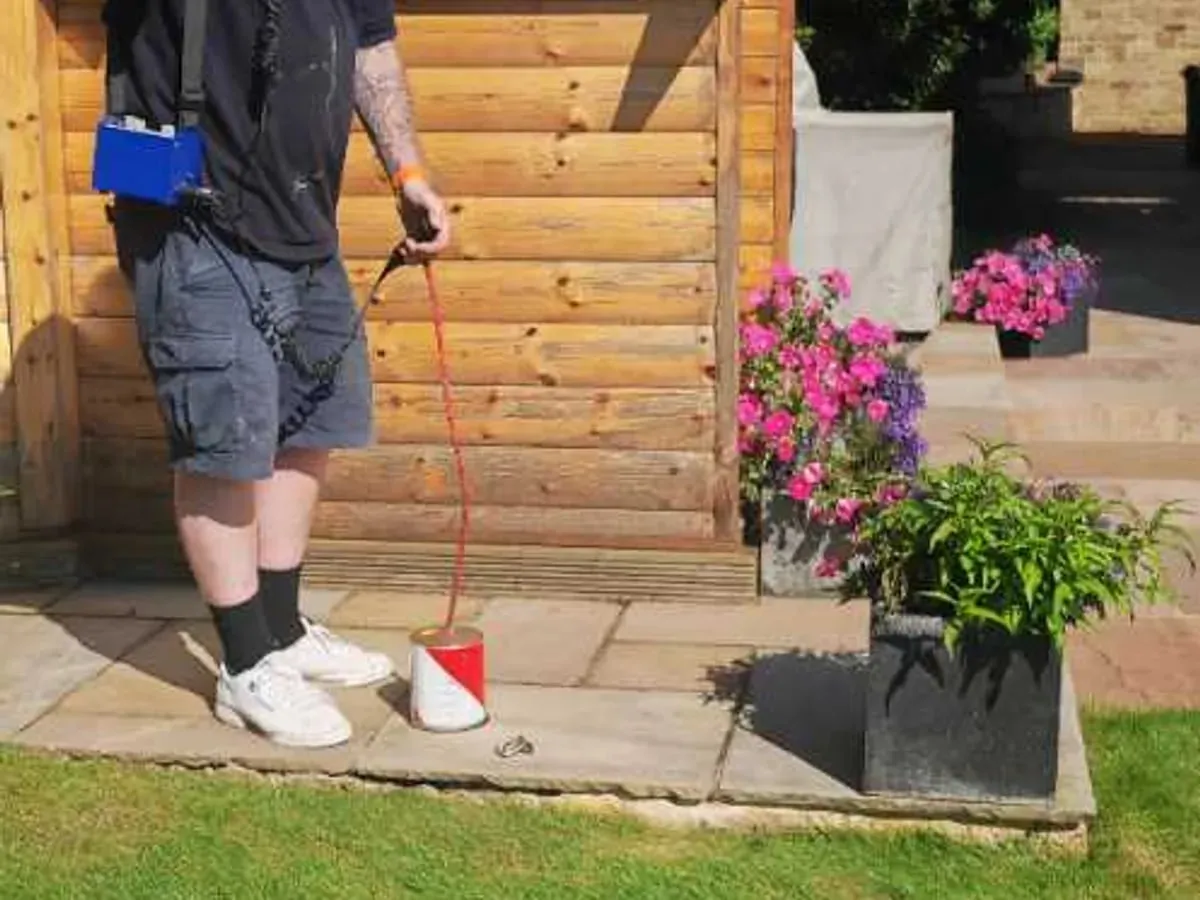
An ADI engineer with the amplifier on a shoulder strap holds a red and white ground microphone on its lead over a patio beside a timber summer house
Listening across a garden patio for a leak on the supply pipe.

Ground microphone

Also called a ground mic or surface microphone

What a ground microphone looks like

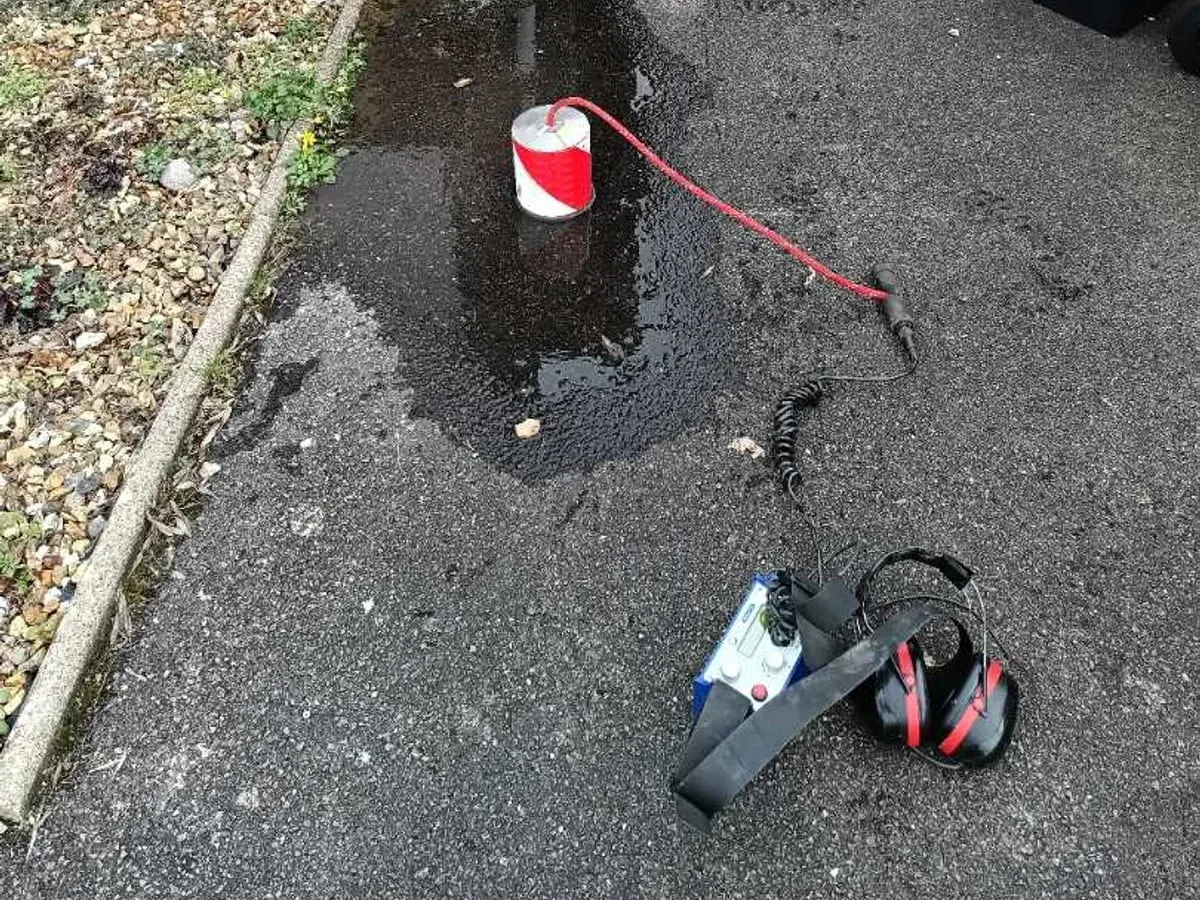
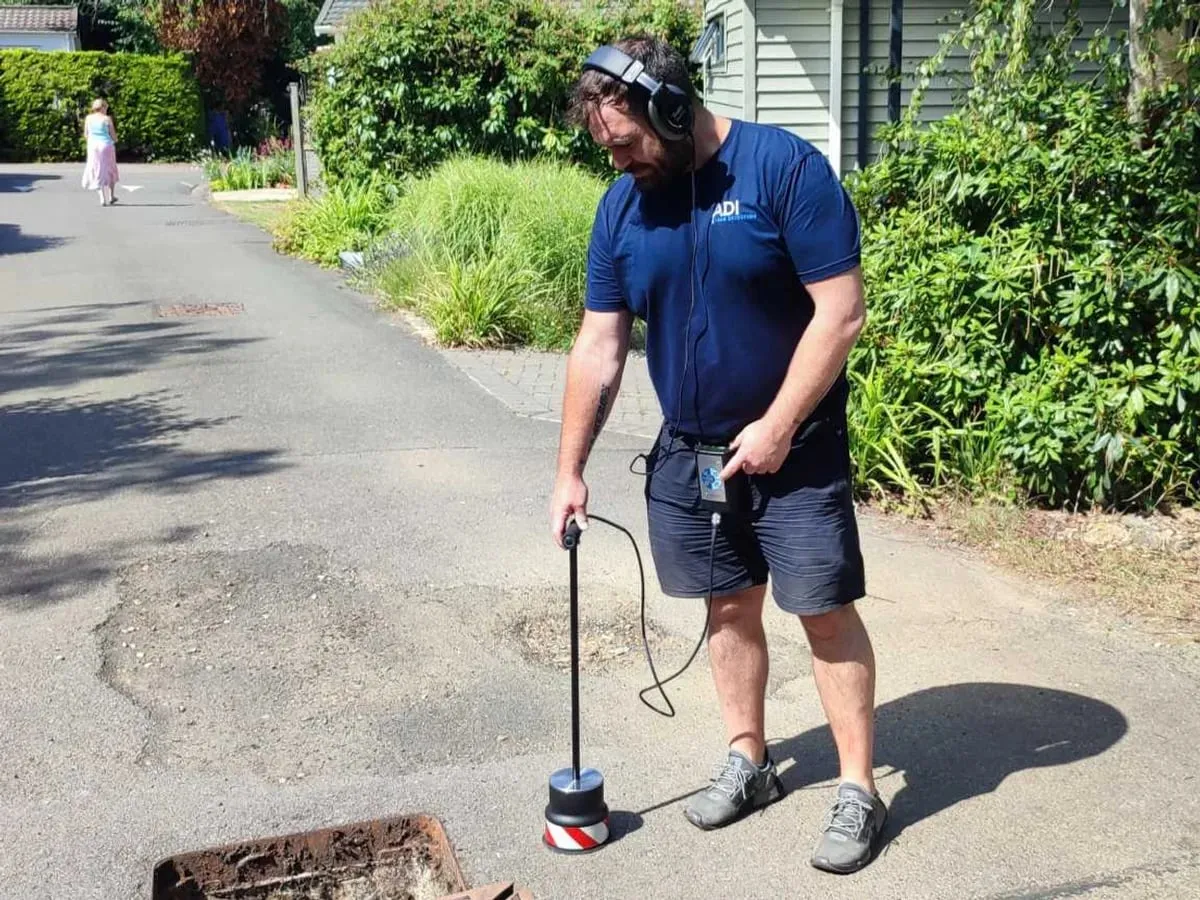
A weighted metal cylinder, about the size of a tin of paint, often banded red and white or left bare silver. It sits flat on paving, tarmac, concrete or tiles and is moved on a long handle or a curly lead. A cable runs back to a handheld amplifier the engineer wears on a strap, and they listen through red ear-defender headphones.

When a ground microphone is used

  • Supply pipes under drives, paths, patios and lawns
  • Pipes buried in concrete or screed floors
  • Pool pipe runs between the pool and the plant room

How a ground microphone is used

The engineer follows the pipe route and puts the microphone down at regular stops, listening and noting the level at each one. As the levels rise, the stops get closer together until one point is clearly the loudest.

Where a ground microphone struggles

Traffic, wind, rain and running appliances compete with the leak. Plastic pipe, deep pipes, loose ground and carpet all soften the sound, so readings are compared along the route and checked with another method where needed.
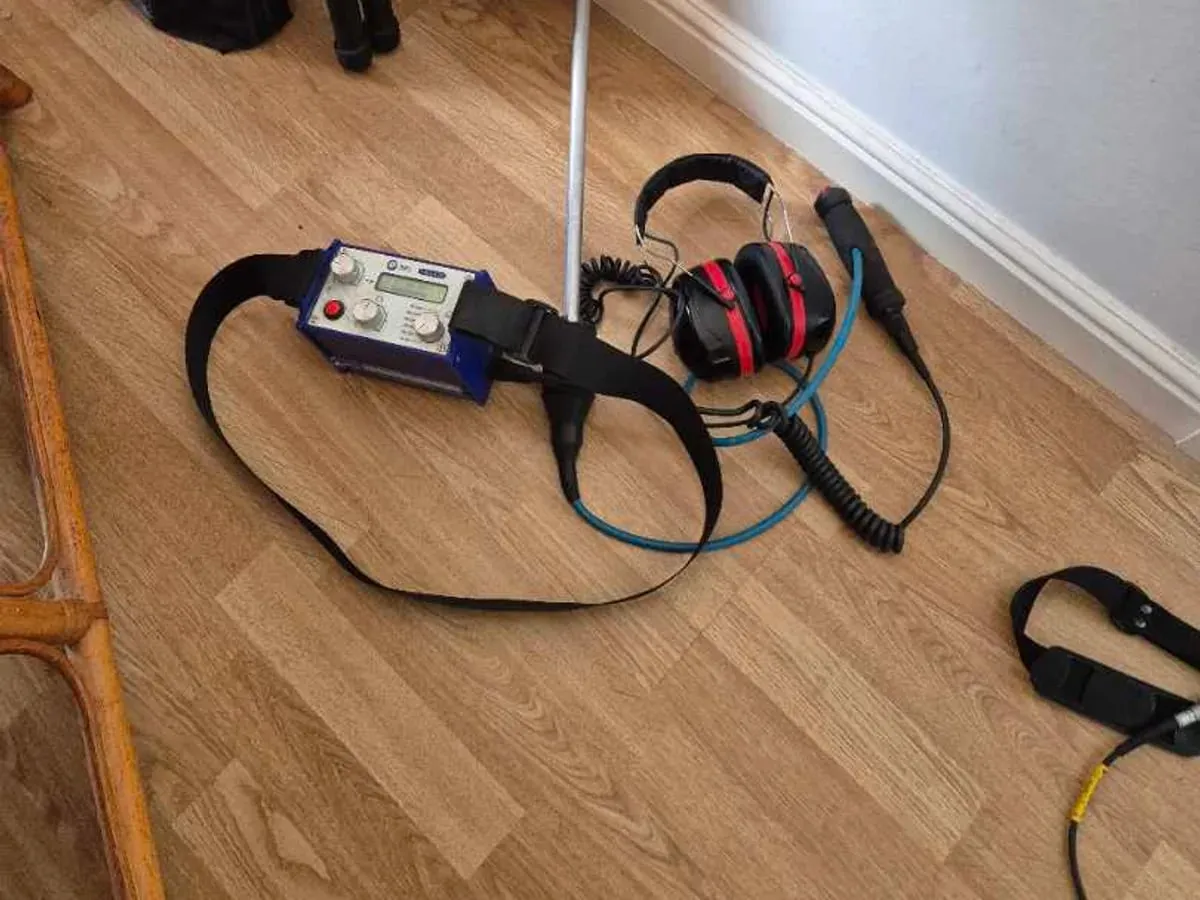
A listening stick, a blue amplifier with a shoulder strap and red ear-defender headphones laid out on a wood-effect floor
The listening stick, amplifier and headphones ready to check radiator pipework.

Listening stick

Also called a contact probe or listening rod

What a listening stick looks like

A steel rod with a rubber grip at the top, plugged into the same amplifier and headphones. The tip is touched onto a stopcock, meter, valve, radiator tail or exposed length of pipe, or lowered into a stopcock chamber.

When a listening stick is used

  • An early check on many jobs, at the stopcock, meter or boundary box
  • Deciding which end of a pipe run is noisier before a ground survey
  • Checking valves, radiator tails and fittings in cupboards and voids

How a listening stick is used

Leak noise travels along the wall of the pipe, especially metal pipe. Touching the rod on fittings at different points tells the engineer whether the leak is making a usable sound, and roughly which direction it is in.

Where a listening stick struggles

It hears the pipe, not the ground above it, so it tells you the leak is on that pipe rather than exactly where along it. Plastic pipe carries the sound a much shorter distance.

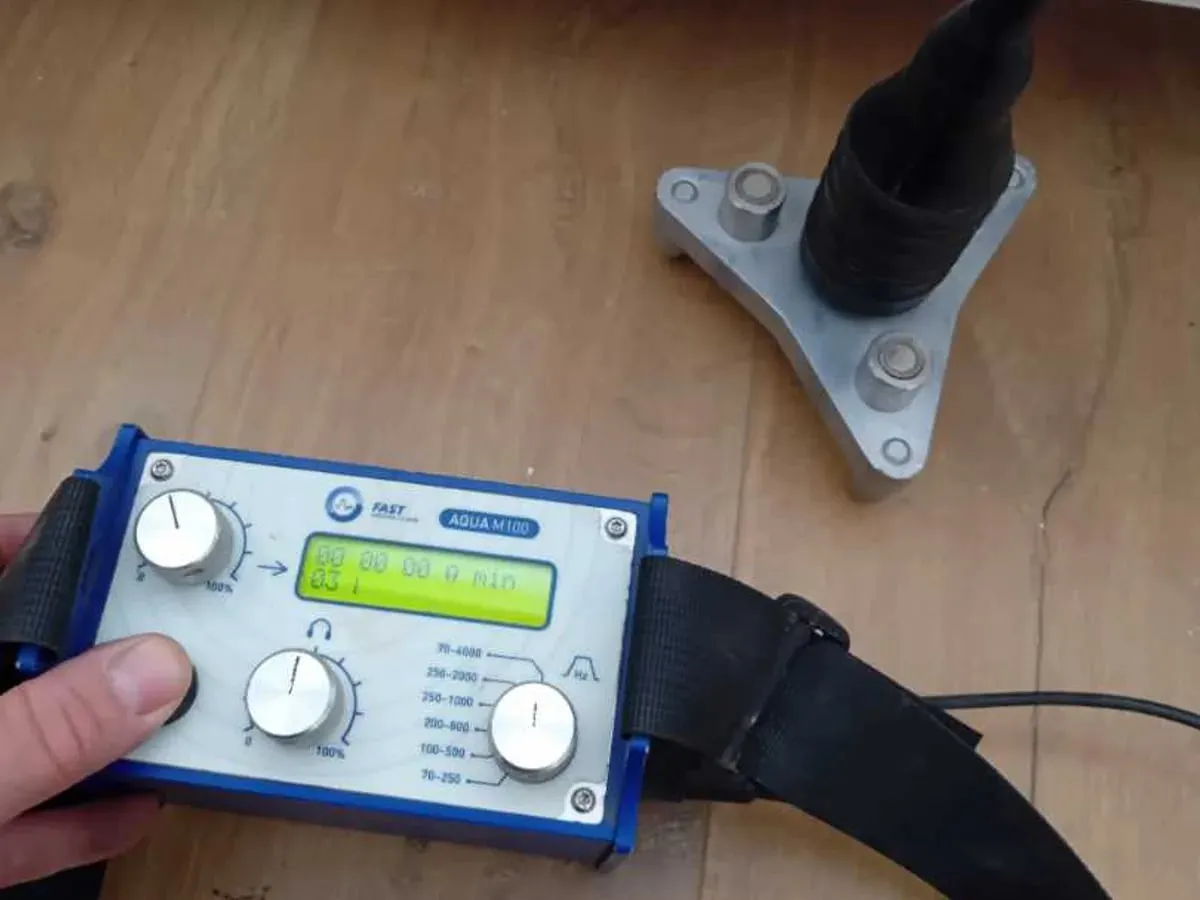
A hand holds a FAST AQUA M100 amplifier while a microphone on a three-legged metal contact foot sits on a bare plywood subfloor
A microphone on a contact foot, listening through a plywood subfloor.

Listening disc

Also called a contact sensor or floor sensor

What a listening disc looks like

A flat disc microphone, or a ground microphone on a three-legged metal foot, which sits steady on uneven or soft surfaces. Either one sits directly on a floor and picks up vibration through the surface. Engineers move it across a room in the same way as a ground microphone.

When a listening disc is used

  • Central heating pipes under floors and inside walls
  • Hot and cold feeds to kitchens, bathrooms and showers
  • Underfloor heating, alongside air pressure and thermal imaging

How a listening disc is used

Placed on the floor over the likely pipe route, it picks up the leak sound carried through tiles, screed or boards. Readings in different spots are compared to find where the sound is strongest.

Where a listening disc struggles

Thick carpet and underlay, floating floors and loops of pipe close together can blur where the sound is coming from.

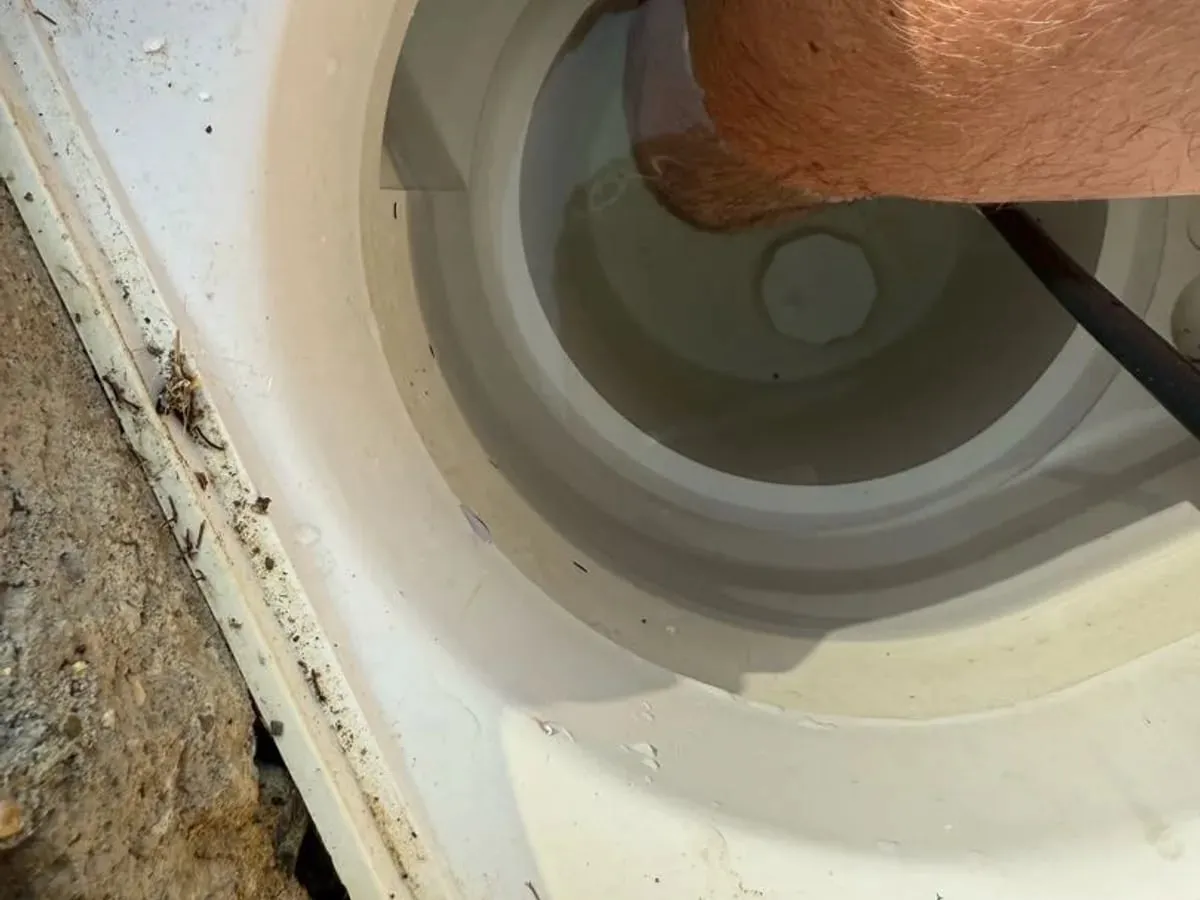
An engineer lowers the black lead of a hydrophone into the water in a white pool skimmer pot
A hydrophone going into a skimmer pot on a pool job in Dunstable.

Hydrophone

An underwater microphone

What a hydrophone looks like

A small waterproof sensor on a lead that is lowered into water: a pool, a skimmer pot or a tank.

When a hydrophone is used

  • Swimming pools and spas
  • Skimmers, returns and fittings below the waterline

How a hydrophone is used

Water carries sound well, so the hydrophone hears water being drawn out through a crack or a leaking fitting. Placing it at each skimmer and fitting in turn narrows down which part of the pool circuit is losing water.

Where a hydrophone struggles

Pumps and filters must be off while listening. Dye and pressure tests on each pipe line confirm what it hears.

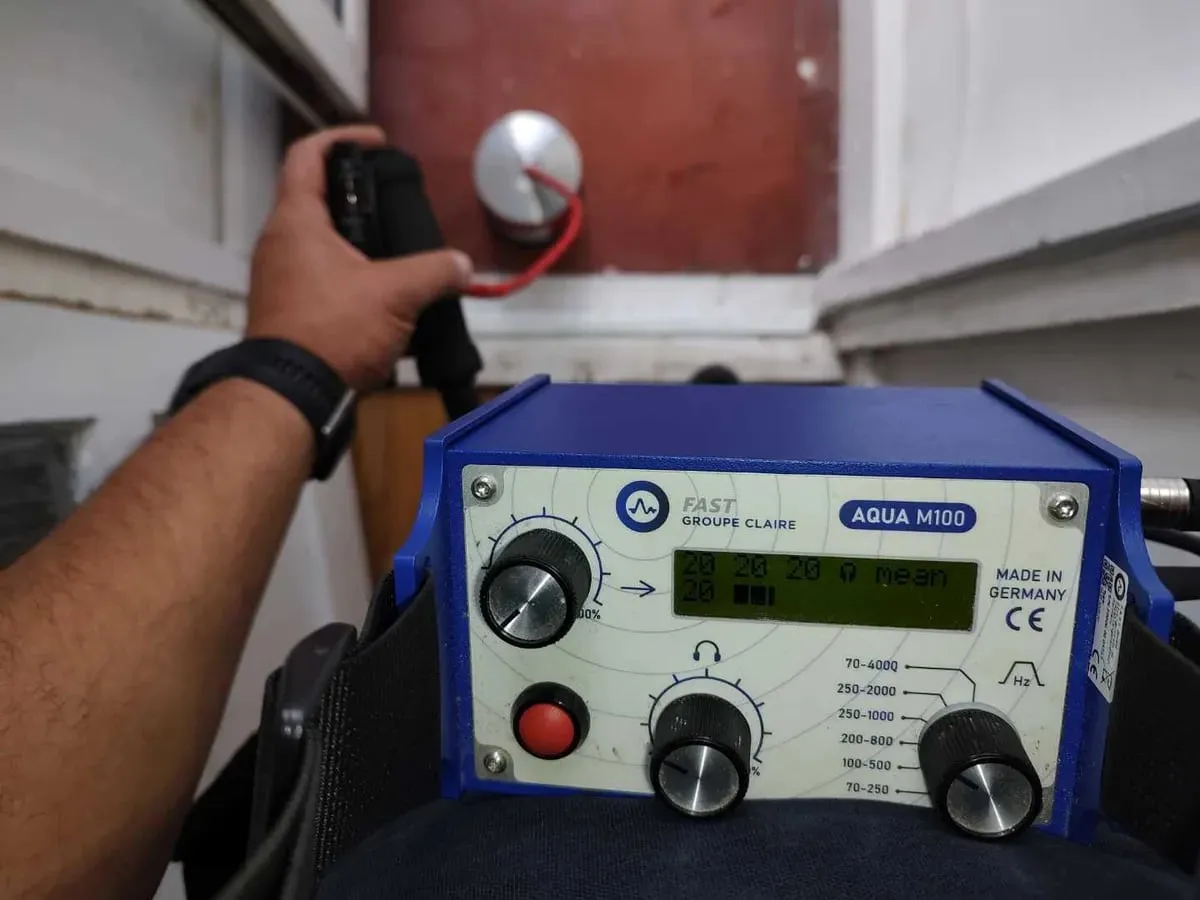
Close-up of a blue FAST Groupe Claire AQUA M100 amplifier with its screen and filter knobs, with the engineer holding a silver ground microphone on a porch behind
A FAST AQUA M100 amplifier in use on a porch floor.

Leak detection amplifier and headphones

The listening unit that every sensor plugs into

What the amplifier and headphones look like

A handheld box, worn on a strap, with a small screen showing the signal level, a volume knob and a filter knob marked in frequency bands. Closed headphones shut out noise around the engineer.

When the amplifier and headphones are used

  • Every acoustic survey

How the amplifier and headphones are used

It boosts the faint hiss from the sensor, and its adjustable filters cut out the frequencies where traffic and footsteps are loudest while keeping the band where the leak sounds clearest. The display shows a level for each stop, so the engineer compares numbers as well as what they hear.

Where the amplifier and headphones struggle

Only as good as the conditions: filters help, but a quiet moment helps more.

Another acoustic method: leak noise correlation

A correlator uses two sensors placed on a pipe, one at each end of a length, often on valves or hydrants. Both send the sound they pick up to a processing unit, which works out the difference in the time the leak’s sound takes to reach each sensor.

Knowing the length of pipe between the sensors and how fast sound travels along that pipe material, the unit calculates where between them the leak must be. It needs access to the pipe at both ends and accurate pipe details, so it suits long runs of main, which is why water companies use it on their networks.

Other leak detection methods used alongside listening

On most jobs the acoustic instruments work alongside other methods, and the strongest findings are where two of them agree.

Pressure testing
Proves there is a leak and which section of pipe it is on, usually before the ground survey starts.
Tracer gas
A mix of 5% hydrogen and 95% nitrogen, which is not flammable, is put into the drained pipe and detected where it rises through the ground or floor. It finds quiet leaks and confirms the acoustic spot.
Thermal imaging
With the heating or hot water running, a thermal camera shows the warm spread a leak leaves in a floor or wall.
Moisture meters
Map how far water has spread through walls and floors, which helps read the acoustic survey.
Call 0333 567 2640

Mon to Fri, 7:30am to 6:30pm